Why Corgis Can't Pull Santa's Sleigh: A Comprehensive Scientific Analysis
Published: 2025-12-09
Every holiday season …
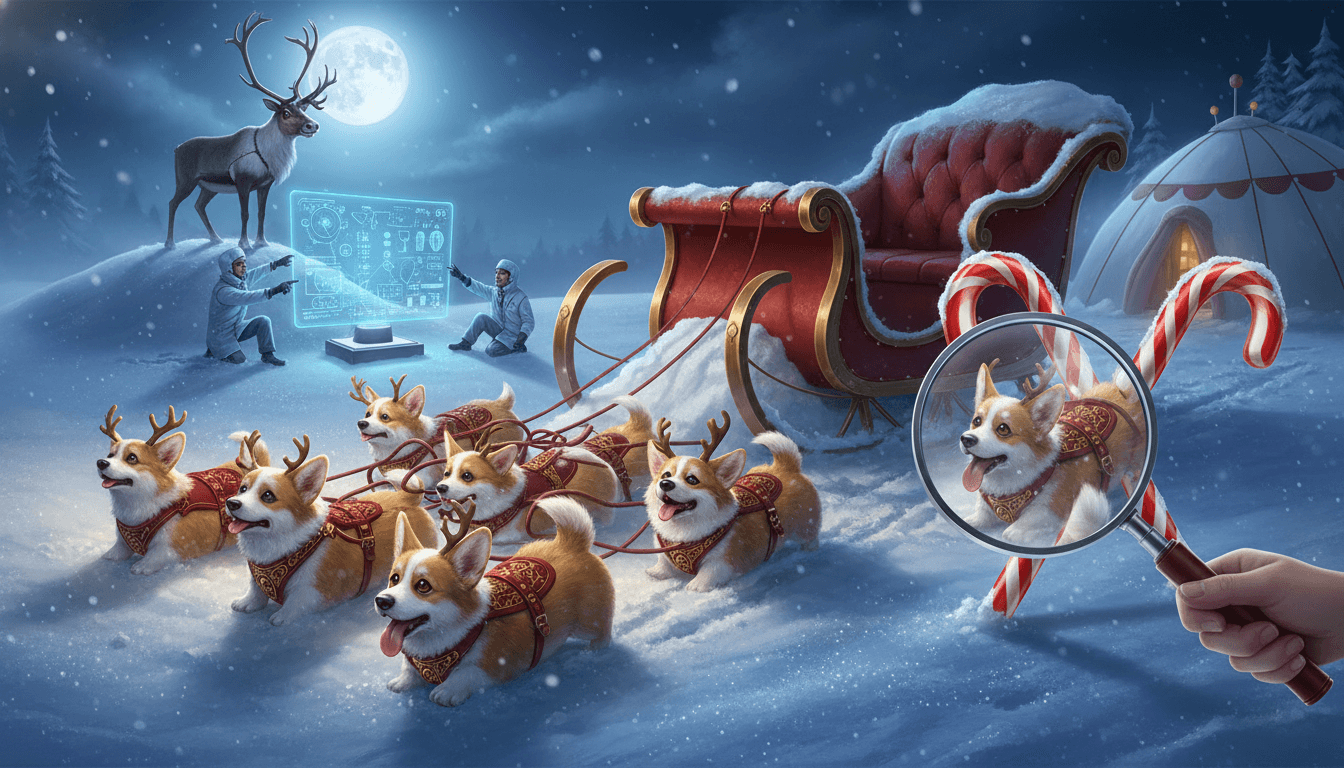
A specific kind of madness descends upon the Corgi community. We look at our stump-legged, loaf-shaped companions—currently vibrating with excitement over a piece of cheese or barking at a dust mite—and we think: “You know what? You could do it. You could lead the sleigh tonight. You have the spirit. You have the drive. You have the ears.”
It is a beautiful dream. Imagine a swarm of hundreds of Corgis, soaring majestically through the Aurora Borealis. Their little white-tipped tails would act as rudders, their barks would herald the arrival of gifts, and their furry bottoms would look adorable against the moon. It makes intuitive sense to us. Corgis are low to the ground, which implies stealth. They have big ears, which implies excellent radar. They are herding dogs, which implies they know how to organize a group.
But here at Planet of the Corgis, we don’t just rely on vibes and cuteness. We rely on hard, cold science. We commissioned a theoretical study to determine the actual feasibility of Operation C.O.R.G.I. (Canine Orbital Replacement & Global Insertion). We ran the numbers on aerodynamics, thermodynamics, food requirements, and the structural integrity of the canine spine under hypersonic reentry conditions.
The results were… well, they were catastrophic.
We are sorry to report that replacing Rangifer tarandus (Reindeer) with Canis lupus familiaris (Corgi) would not only cancel Christmas but likely result in a global environmental disaster of unprecedented proportions.
Below is the full, simplified breakdown of why this swap is scientifically impossible.
The Aerodynamic Profile: Arrow vs. Potato
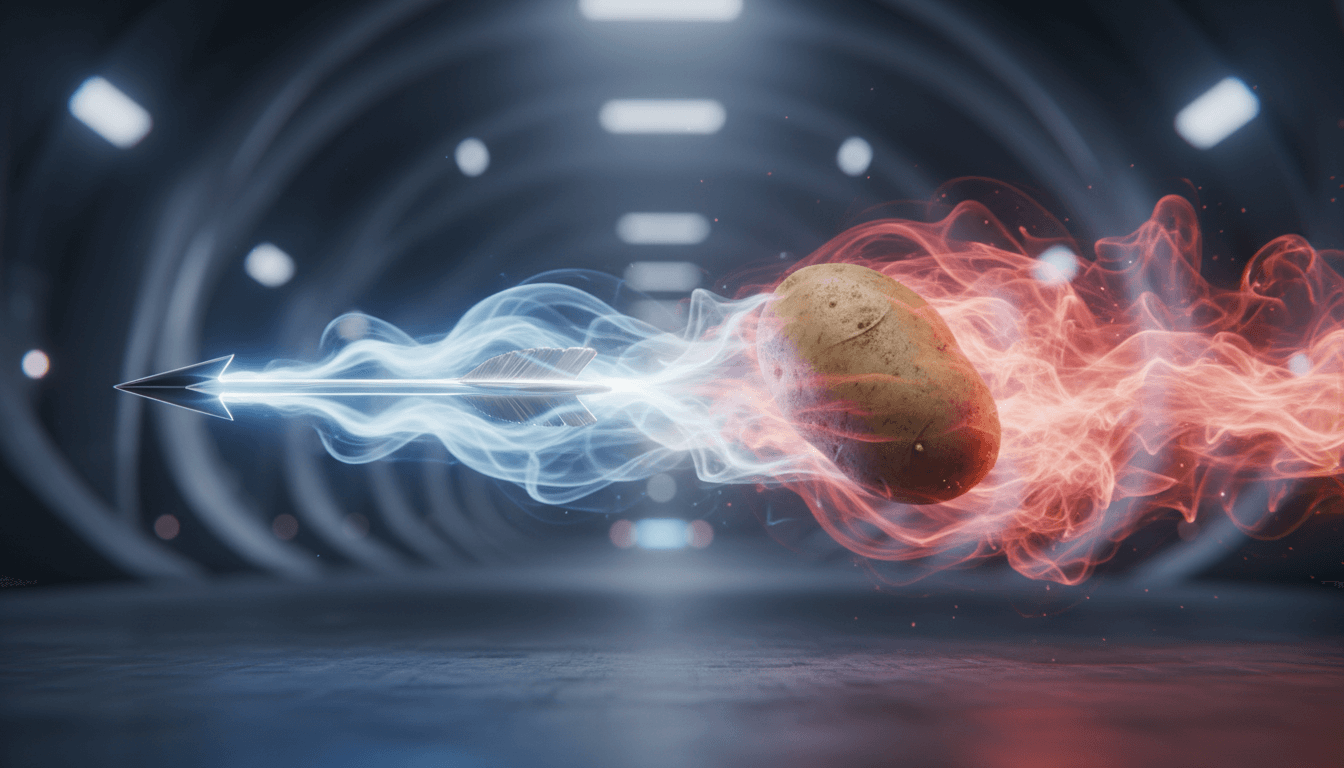
To understand why Reindeer are the gold standard for hypersonic gift delivery, you first have to look at their shape. Nature designed the Reindeer to be an aerodynamic machine. They are tall, leggy, and slab-sided. Their necks are thick and slope gently into their shoulders, creating a natural “fairing” that helps air slide over them smoothly. When a Reindeer runs, it cuts through the wind like an arrow.
Corgis, scientifically speaking, are shaped like a loaf of bread. Or perhaps a potato.
In the world of fluid dynamics—the study of how air moves around objects—there is a concept called “Drag.” Drag is the resistance you feel when you stick your hand out of a moving car window. If you hold your hand flat, the air slips past (low drag). If you turn your palm to face the wind, your hand gets pushed back violently (high drag).
Now, imagine Santa’s sleigh. To deliver presents to every child on Earth in one night (about 31 hours including time zones), Santa has to travel at roughly 3,000 times the speed of sound. At these hypersonic speeds, the air doesn’t behave like a gentle breeze; it behaves like a solid concrete wall.
When a Corgi flies “Superman style”—with front paws tucked forward and back legs splooted out—it presents a blunt, flat chest to that oncoming wall of air. This shape is a disaster. It pushes a massive wave of air ahead of it, known as a “bow wave.”
Furthermore, we have to talk about the fur. Reindeer have sleek, hollow guard hairs that lie flat against their body, creating a smooth surface. Corgis have a “double coat”—a dense, fluffy undercoat designed to keep them warm in Welsh winters. At hypersonic speeds, this fluff would not stay flat. It would flutter and vibrate violently. This creates “skin friction,” turning the air around the Corgi into a chaotic, turbulent mess.
Essentially, a Corgi swarm wouldn’t glide through the sky; it would plow through it. The energy required to push a swarm of fuzzy cylinders through the atmosphere would be astronomical. You aren’t just fighting gravity; you are fighting the very concept of air resistance with a shape that nature designed to move slowly through tall grass.
The Kibble Singularity (The Weight Problem)
This is where the logistics go from “difficult” to “impossible.” High-performance engines require fuel, and biological engines are no different.
Reindeer are metabolic miracles. In the winter, their bodies enter a state of extreme efficiency. They can survive on low-quality moss and lichen, which they can find anywhere in the Arctic. They are like hybrid cars: they get incredible mileage and have very low emissions.
Corgis, on the other hand, are like Hummer trucks that run on cheese. They are high-energy herding dogs that burn calories rapidly. A husky pulling a sled in the Iditarod race consumes about 10,000 to 15,000 calories every single day just to keep moving. We can assume a Corgi pulling a magic sleigh would need a similar amount of fuel relative to its size.
Let’s look at the math of the swap. A single Reindeer weighs about 350 pounds. A robust Corgi weighs about 30 pounds. This means that just to match the muscle mass of Santa’s team of nine Reindeer, you would need about 100 Corgis.
But remember the “Potato Shape” problem? Because Corgis have so much air resistance, they have to work harder than Reindeer. You can’t just swap them pound-for-pound. Our models suggest you would actually need a swarm of roughly 500 Corgis to generate enough thrust to overcome the drag.
Here is the nightmare scenario:
If you have 500 dogs, and each dog needs 2 pounds of premium high-performance kibble per day to survive the flight, you need to load 1,000 pounds of dog food onto the sleigh.
But wait. Now the sleigh is 1,000 pounds heavier.
Because the sleigh is heavier, you need more dogs to pull the extra food.
But those new dogs need to eat, too. So you need to add more food.
But now the sleigh is even heavier, so you need even more dogs.
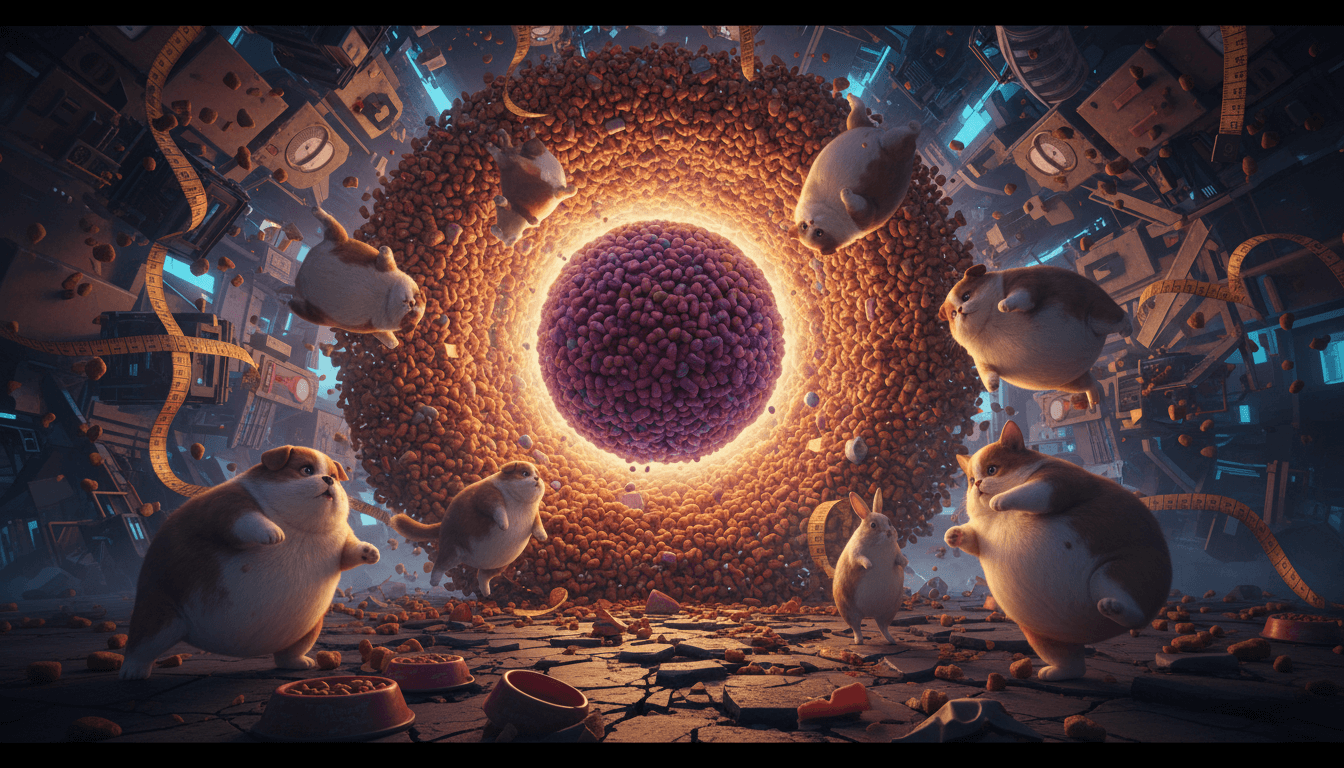
This is a vicious cycle known in rocket science as the “Tyranny of the Rocket Equation.” In our case, we call it the Kibble Singularity. The weight of the food grows exponentially. Very quickly, you reach a point where Santa is leaving the North Pole pulling a sleigh that carries 80,000 tons of Chicken & Rice Formula and zero PlayStations. The mission fails before it even launches.
The Atmospheric “Brown Mist”

What goes in must come out. Biology is a cruel mistress, and if you feed a swarm of dogs millions of calories, there will be a significant output.
Reindeer are polite creatures. They produce dry, fibrous pellets that have very little smell. These pellets freeze instantly in the cold air and disperse harmlessly in the wind. They are essentially biodegradable confetti.
Corgis produce… well, you know what they produce. It is not dry, and it is certainly not odorless.
Let’s do the unpleasant math. If we have our “Drag-Adjusted Swarm” of 500 Corgis, and they are eating high-calorie performance food, they will be producing a massive amount of waste. We estimate the swarm would generate roughly 1,000 to 1,500 pounds of poop during the single night of delivery.
This presents a terrifying environmental hazard. If the sleigh is flying over a major city—say, New York or London—at hypersonic speeds, this waste is being jettisoned into the slipstream. It would either atomize into a toxic “Brown Mist” that settles over the city like a fog, or it would freeze into high-velocity projectiles (“Poop Hail”) that could shatter windows and dent cars.
The environmental impact statement alone would tie Santa up in court for decades. The concept of a “White Christmas” would become a thing of the past, replaced by something much more unsavory.
Structural Engineering: The “Slinky” Spine

The most iconic feature of the Corgi is its long back and short legs. This body shape is called chondrodysplasia. While it is adorable when they are trotting around the kitchen, it is a structural nightmare for aerospace applications.
Think of a Corgi’s spine like a long bridge. It is supported by two piers (the front legs and the back legs), but the middle of the bridge is unsupported. In engineering terms, this is a “cantilever.”
Now, consider the physics of a “Chimney Stop.” Santa travels at thousands of miles per hour, but he has to stop instantly to land on a rooftop. The G-forces involved in that deceleration are immense.
Reindeer have short, arched spines that are built to compress. When they slam on the brakes, the force travels straight down their long legs into their hooves. They are built like shock absorbers.
Corgis are not built like shock absorbers; they are built like slinkies. If a Corgi swarm hit the brakes at Mach 10, the harness would pull back on their chests, but the momentum of their heavy bodies would want to keep going forward. This would cause their long spines to flex violently. It would be a catastrophic spinal event for the entire team.
Unless Santa equips every single Corgi with a custom-molded carbon-fiber body cast or a titanium exoskeleton, the swarm would likely suffer back injuries at the very first house.
Additionally, Corgi fans often argue that the “Sploot” (where the dog lays flat with legs behind them) is aerodynamic. While this is true, it removes the landing gear. You cannot land a plane on its belly. If a Corgi tries to land in a sploot on a shingled roof, the friction would be disastrous. They need legs to land, but their legs are only four inches long.
Ground Operations: The Deep Snow Crisis
Let’s assume, by some miracle of Christmas magic, the Corgi Swarm manages to fly and arrives at the first house safely. Now they have to deal with the roof.
Reindeer are tall. They have a shoulder height of about 50 to 60 inches. This gives them plenty of ground clearance. If they land on a roof covered in two feet of fresh snow, they can stand comfortably. Their legs act like stilts, keeping their bodies above the powder.
Corgis have a ground clearance of approximately four inches.
Imagine the scenario: It is Christmas Eve. A beautiful blanket of six inches of snow covers the rooftop. The Corgi swarm lands. Floomp.
They instantly sink up to their chins. Their bellies are dragging on the roof. Their little legs are paddling furiously under the snow, but their wheels are spinning. They are “high-centered,” like a car stuck on a speed bump. This is known as the “Turtle Effect.”
The sleigh is now stranded. The dogs cannot generate traction because they are swimming, not running. Santa would have to get out of the sleigh, grab a shovel, and dig a trench for 500 dogs at every single house.
There are roughly 800 million homes to visit. If Santa spends just one minute digging his dogs out of the snow at each house, the delivery run would take about 1,500 years to complete. By the time he finished, the children waiting for toys would be ancient history.
The “Squirrel” Deviation Factor
Navigation is critical. Reindeer are prey animals. Their psychology is built around safety and focus. When they are moving as a herd, they follow the leader and stick to the path. They are stoic, reliable, and boring. That is exactly what you want in a flight crew.
Corgis are herding dogs with a dash of terrier. They are bossy, easily distracted, and possess a very high “prey drive.” They are “alert barkers” who notice everything.
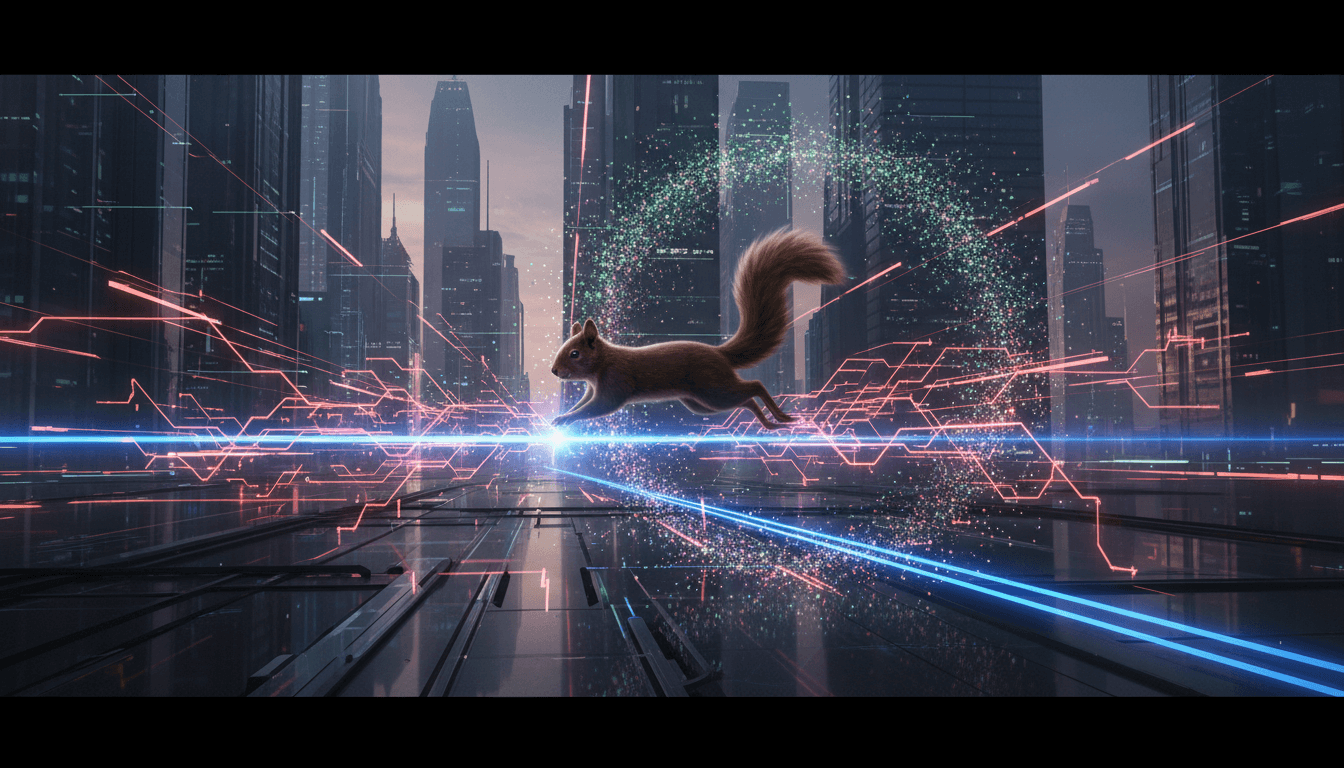
We calculated the probability of Squirrel-Induced Vector Deviation (SIVD).
Imagine the sleigh is traveling at hypersonic speed over a suburb. Suddenly, a Corgi in Row 4, Position Left, spots a leaf blowing in the wind. Or a squirrel. Or a plastic bag. Or literally nothing at all.
A Reindeer would ignore it. A Corgi will react.
Corgis have snake-like reflexes. The distracted dog will execute a hard 90-degree turn to chase the target.
Here is where the herding instinct makes it worse. Corgis control livestock by nipping at their heels. When the dog in front turns, the dog behind it instinctively thinks, “Oh, we are turning? I better nip the heels of the guy in front of me to keep him moving!”
This creates a chaotic chain reaction. Instead of a straight line of propulsion, the swarm devolves into a swirling vortex. We call this a “Corgnado.”
The 500 dogs begin spinning in a tight circle, barking at each other, while the heavy sleigh (carrying all that dog food) keeps moving forward due to momentum. The lines tangle. The sleigh tumbles. The presents are ejected into the stratosphere. It is total mission failure, all because one dog saw a cat on a balcony.
Acoustics: The Sonic Bark Boom
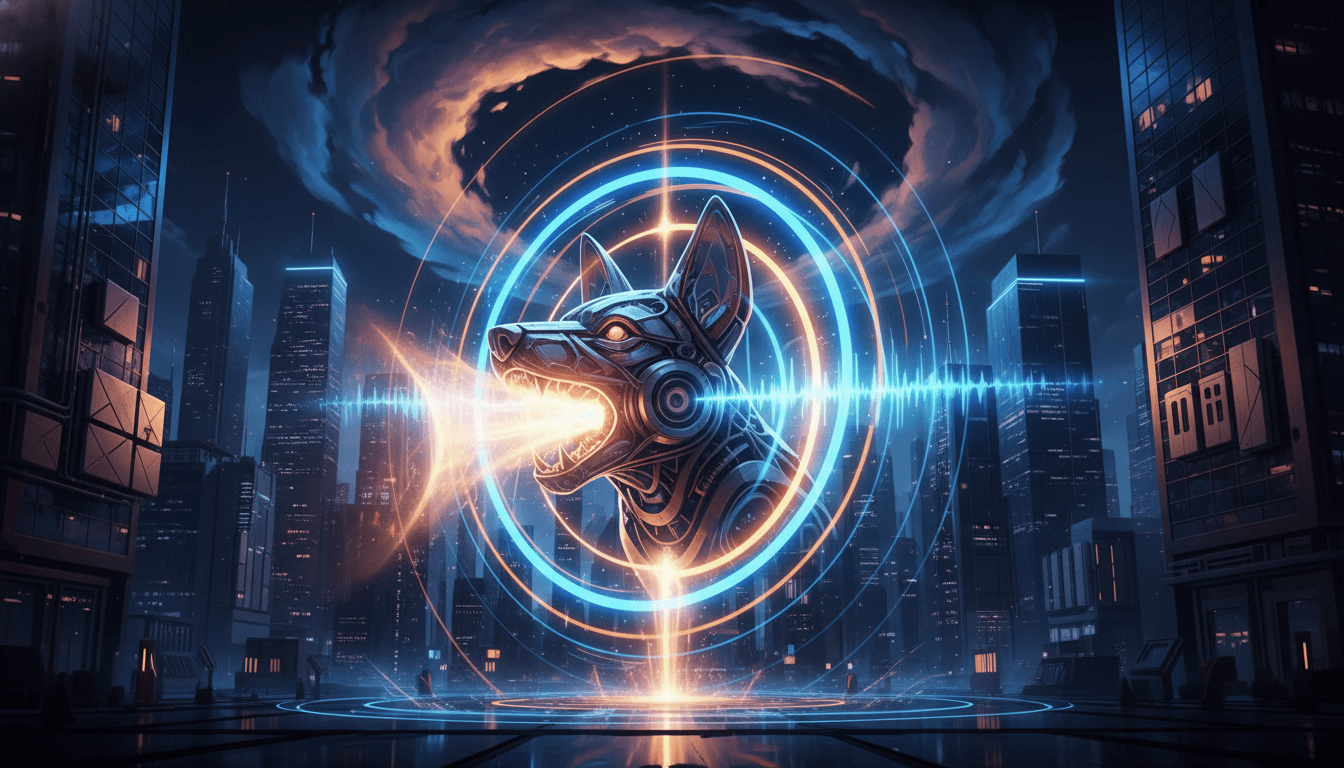
Stealth is a major part of Santa’s operation. He relies on the element of surprise. He lands when you are sleeping. He is quiet. Reindeer are silent fliers. Their tendons make a soft clicking sound when they walk, but otherwise, they are ninjas.
Corgis are not ninjas. They are the loudest things on Earth relative to their size. They bark at the wind. They bark at doorbells on TV. They bark at the existential dread of an empty food bowl.
A single Corgi bark is loud—about as loud as a chainsaw.
Now, imagine 500 Corgis.
When 500 dogs bark at the same time, you don’t just get a louder sound; you create a wall of acoustic energy.
Furthermore, consider the Doppler Effect. As the sleigh approaches a house at supersonic speeds, the sound waves of 500 barking dogs would compress into a massive shockwave. This is the Sonic Bark Boom.
Windows would shatter. Car alarms across the entire hemisphere would go off simultaneously. Children would not wake up to the gentle sound of hooves on the roof; they would wake up to a sound resembling an artillery barrage. The “Silent Night” would become the “Deafening Night.” Santa would be arrested for noise pollution before he even reached the Canadian border.
Thermal Regulation: The Hot Dog Problem
Finally, we must address the issue of heat. Reindeer are built for the cold. Their fur is hollow, acting like a vacuum flask (a Thermos) to keep their body heat in and the cold out. But interestingly, this insulation also helps protect them from the heat generated by air friction at high speeds.
Corgis have a double coat designed to trap body heat. It is great for keeping a dog warm while sleeping in a barn, but it is terrible for running at Mach 10.
Dogs cool themselves by panting—evaporating moisture from their tongues. But you cannot pant at supersonic speeds. If a Corgi stuck its tongue out at 3,000 miles per hour, the wind resistance would dry it out instantly. The dynamic pressure would likely inflate the poor dog like a balloon.
Without the ability to pant, and with a fur coat trapping all their metabolic heat, the Corgi swarm would overheat within minutes. They would essentially become “Hot Dogs” in the most literal and tragic sense. To survive, they would need liquid-cooling suits, which adds more weight, which leads us back to the Kibble Singularity.
Conclusion: Stick to the Couch
The scientific evidence is overwhelming. While the Corgi is a superior species for many things—judging you while you eat, looking cute in a bandana, and protecting the living room from evil vacuum cleaners—they are biologically and physically ill-suited for high-velocity global logistics.
The Kibble Singularity, the Aerodynamic Drag of the Potato, the Slinky Spine Failure, and the Brown Mist are hurdles that even Christmas magic cannot overcome.
So, this Christmas Eve, look at your Corgi snoozing by the fire. Appreciate them for what they are: low-speed, high-drag cuddle machines. Let the Reindeer do the heavy lifting in the freezing cold. The Corgis have a much more important job: keeping the rug warm and waiting for Santa to accidentally drop a cookie.
Happy Holidays from Planet of the Corgis!
Follow Our Corgi Adventures!
Pinterest
Instagram
TikTok
YouTube