
Could a Corgi Replace Air Bud? A Semi-Serious Investigation into Canine Hoops
Published: 2025-12-05
Let’s be real for a second.
We all love Air Bud. The 1997 cinematic masterpiece didn’t just give us a basketball-playing Golden Retriever; it gave us a legal precedent that has haunted pickup games for decades: “Ain’t no rule says a dog can’t play basketball.”
But let’s take off the rose-colored glasses. Buddy, the athletic Golden Retriever star, played in the 90s. The game was different then. It was slower, more physical, and frankly, a bit disorganized. The modern game—the era of Steph Curry, spacing, and advanced analytics—is a different beast. It values efficiency, low-turnover play, and specialized roles.
Which brings us to a controversial question: Is the Golden Retriever actually the best breed for basketball? Or have we been sleeping on a short-legged, big-eared, cattle-herding powerhouse?
I’m talking, of course, about the Pembroke Welsh Corgi.
In this deep dive, we’re going to look at the physics, the biology, and the cold hard rulebook to determine if a Corgi could actually take Air Bud’s spot on the roster. Grab a snack, maybe a milk bone, and let’s break down the data.
The Tale of the Tape: David vs. Goliath
Before we get into the advanced metrics, we have to look at the raw physical stats. On paper, this looks like a blowout.
The Golden Retriever (The Incumbent)
- Height: 21–24 inches
- Weight: 55–75 lbs
- Vertical Leap: ~3–6 feet (with a running start and a toy involved)
- Vibe: Happy-go-lucky, eager to please, will probably lick the ref.
The Pembroke Welsh Corgi (The Challenger)
- Height: 10–12 inches
- Weight: 27–30 lbs
- Vertical Leap: ~1–2 feet (on a good day)
- Vibe: Bossy, low to the ground, judges you constantly.
At first glance, you’d say the Golden wins. Basketball is a height game, right? But hold on. We aren’t building a team of 5 centers. We need a Point Guard. And in the world of ball-handling and floor generalship, being a giant isn’t always better. Sometimes, you need to be Muggsy Bogues.
The Physics of the “Sploot”: Why Low Man Wins
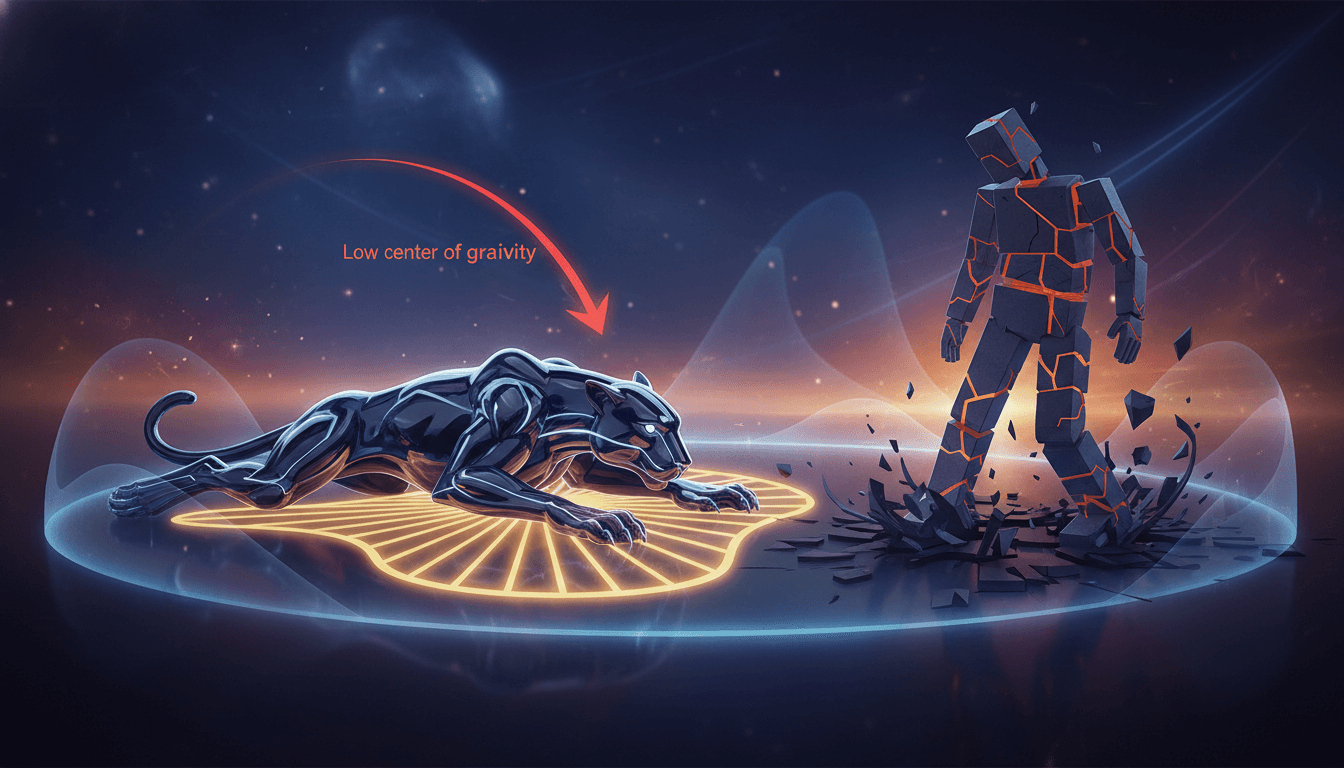
Here is where the Corgi starts to make a serious case for itself. It comes down to basic physics: Center of Mass (COM).
The Golden Retriever is a lanky, leggy animal. Its center of mass is relatively high. In basketball terms, a high center of gravity makes you easier to knock off balance. If Air Bud goes up for a rebound and gets boxed out by a sturdy Power Forward, he’s tipping over.
The Corgi, however, is built like a tank turret. With a center of mass just inches off the floor and a wide, rectangular base (thanks to those short legs and long spine), a Corgi is nearly impossible to topple. In physics terms, stability is increased when the center of gravity is lower to the base of support.
Think about dribbling. The “Low Man Wins” concept is fundamental in basketball. A human defender has to reach down to steal the ball. To steal from a Corgi, a 6’6” NBA player basically has to touch his toes.
- Golden Dribble Height: ~24 inches (knee high for a human).
- Corgi Dribble Height: ~8 inches (ankle high).
If a Corgi is dribbling the ball with its nose (we’ll get to the legality of that in a minute), the ball is spending almost zero time in the air. The cycle time of the dribble is incredibly fast. To steal that ball, a defender risks a “kick ball” violation or, worse, tripping over the dog entirely. It’s the ultimate “ankle breaker” because the Corgi is literally at ankle height.
Speed Kills, But Acceleration Destroys

“But Corgis are slow!” you scream at your screen. “They have tiny legs!”
False. Or at least, mostly false.
Yes, a Golden Retriever has a higher top speed. A fit Golden can hit 35 mph in a full sprint. That’s fast. But a basketball court isn’t a 100-meter dash; it’s a 94-foot box filled with traffic.
Top speed doesn’t matter as much as acceleration (how fast you get going) and agility (how fast you can turn).
Believe it or not, Corgis are rockets. They have been clocked at 25 mph. For context, Usain Bolt’s top speed is roughly 23.35 mph during a 100m sprint.7 That means a Corgi can outrun the fastest human on Earth.
But the real weapon is the “Corgi Drift.” In dog agility competitions, Corgis are surprisingly elite at the “weave poles”—an obstacle that requires rapid side-to-side movement. Because they are long and flexible, they can corner without braking. A Golden Retriever, being taller, has to slow down to turn so it doesn’t flip over. A Corgi just leans and powers through.
In a pick-and-roll scenario, a Corgi doesn’t need to go over the screen or around the screen. It can literally run under the screener’s legs. The “Under-Legs Switch” is a defensive coverage that is mathematically undefendable.
The Shooting Conundrum: The “Nose Boop” Mechanic

Okay, we have to address the elephant (or the retriever) in the room. Shooting.
In the movie, Buddy shoots by balancing the ball on his nose and then popping it into the hoop. It looks cool, but let’s look at the mechanics.
- Release Point: Buddy releases the ball at about 6 feet high (jumping + neck extension).
- The Problem: Physics tells us that for a ball to go in, you need a specific arc and velocity. Shooting with your nose (an impact force rather than a throwing force) is incredibly hard to control. In fact, the real-life trainer of Buddy admitted that the dog tried to bite the ball constantly and they had to grease it with olive oil to get him to “pop” it.
Can a Corgi shoot? Physically, no. A Corgi jumping maxes out at maybe 2 feet. Unless we are installing a cat door in the backboard, the Corgi is not a scoring threat from the perimeter.
However, there is a caveat: Free Throws.
NBA legend Rick Barry shot 89.3% from the free-throw line using an underhand “granny style” shot. Physics proves this is the most efficient way to shoot because it provides a softer touch and better arc. A dog “nose boop” is essentially an underhand shot—force applied from below.
If the NBA allowed the Corgi to take free throws from a ramp, or perhaps if the Corgi could launch the ball by running into it at full speed (creating a kinetic energy transfer), they might actually have a flatter, more consistent arc than Buddy’s erratic head-butts. But realistically? The Corgi is a pass-first Point Guard. He’s the Rajon Rondo of dogs. He’s not there to shoot; he’s there to facilitate.
The “Air Bud” Loophole Revisited
The entire premise of the movie rests on the referee checking the rulebook and saying, “Ain’t no rule says a dog can’t play basketball.”
Is that true?
- NBA Rule 10, Section XII says a player “may not assist himself to score by using the basket ring or backboard to lift, hold or raise himself.”. It doesn’t explicitly say you can’t be a dog.
- The “Kick Ball” Rule: In basketball, you cannot intentionally strike the ball with your leg or foot. For a dog, are the front paws “hands” or “feet”? Morphologically, they are homologous to hands. But since dogs walk on them, a ref could argue any paw contact is a kick ball violation.
Here is where the Corgi wins. Corgis are herding dogs. They control things with their noses and by nipping (more on that later). They don’t paw at things like Retrievers do. A “header” in basketball is perfectly legal. You can hit the ball with your head.
Because the Corgi plays exclusively on the ground, utilizing “nose dribbles,” they are actually less likely to commit a handling violation than a Golden Retriever, who instinctively wants to grab the ball with its mouth (carrying violation) or bat it with its paws (kick ball violation).
The Psychology of the Game: Herder vs. Retriever

This is the most critical factor. Athleticism is nothing without basketball IQ.
The Golden Retriever (The Ball Hog)
Retrievers are bred to… well, retrieve. They find the object and they bring it back. In a game, this manifests as “Hero Ball.” Buddy gets the rebound, and he wants to keep it. He might bring it to his owner (Josh), but he’s not looking for the open man in the corner. He’s looking for a treat. He plays for validation.
The Corgi (The Floor General)
Corgis are heelers. They were bred to move cattle—animals 50 times their size—by nipping at their heels and barking orders. They are fearless, bossy, and highly organized.
In basketball terms, a Corgi is Chris Paul.
- Spacing: A Corgi instinctively wants to organize the “herd” (the other players). If the Power Forward is out of position, the Corgi will nip at his heels until he cuts to the basket.
- Defense: Corgis are relentless. They don’t just guard you; they annoy you. They have a “big dog” bark and they don’t back down.
- The “Nipping” Problem: Okay, this is a foul risk. Corgis are prone to nipping when excited.16 If a Corgi bites Kevin Durant’s ankle, that’s a Flagrant 2 foul and an ejection. We’d need to train the Corgi to “nose boop” instead of bite, but the aggressive defensive intensity is exactly what you want in the playoffs.
The Strategy: The “Low-Orbit” Offense

So, how do you actually use a Corgi on the court? You don’t use him for dunks (sorry, Air Bud fans). You use him for chaos.
Imagine the “Nutmeg” Play:
The Corgi brings the ball up the court. The defender spreads his legs to get into a defensive stance. The Corgi simply dribbles through the defender’s legs. The defender turns around, confused, and trips over his own feet. The Corgi is now in the paint, causing the defense to collapse. He flicks the ball out to the corner for an open 3.
It’s the ultimate “Small Ball” lineup.
And defensively? The Corgi is a tripping hazard that you can’t legally trip over. The NBA rule on “incidental contact” is fuzzy 17, but generally, if you trip over a player who has established position, that’s an offensive foul on you. The Corgi exists in a permanent state of established low position. An opposing player driving the lane has to constantly look down to make sure they don’t step on the dog. That split second of distraction is all your team needs to get the steal.
The Verdict

Look, I love Buddy. He’s a good boy. He’s an American icon. But his game is dated. He relies on athleticism and flashy dunks that, quite frankly, would get blocked by Victor Wembanyama in two seconds.
The Pembroke Welsh Corgi offers a strategic advantage that the modern NBA isn’t ready for.
- Lower Turnovers: Unstealable dribble height.
- Better Defense: Can switch under screens and provides elite ankle-biting pressure.
- Higher IQ: Herding instincts translate perfectly to floor spacing and team organization.
- Speed: Faster than Usain Bolt in a burst.
So, could a Corgi replace Air Bud?
If you want a halftime show? No. Keep the Golden Retriever.
If you want to win a Championship? Absolutely.
Draft the Corgi. Put him in a tiny jersey. Call the play ” The Sploot.” And watch the dynasty begin.
Follow Our Corgi Adventures!
Pinterest
Instagram
TikTok
YouTube